What a standby generator actually has to be able to run
A standby generator is bought on a promise and judged on a single day, which is why the sizing conversation matters more than the badge.
September 7, 2026 · 4 min read
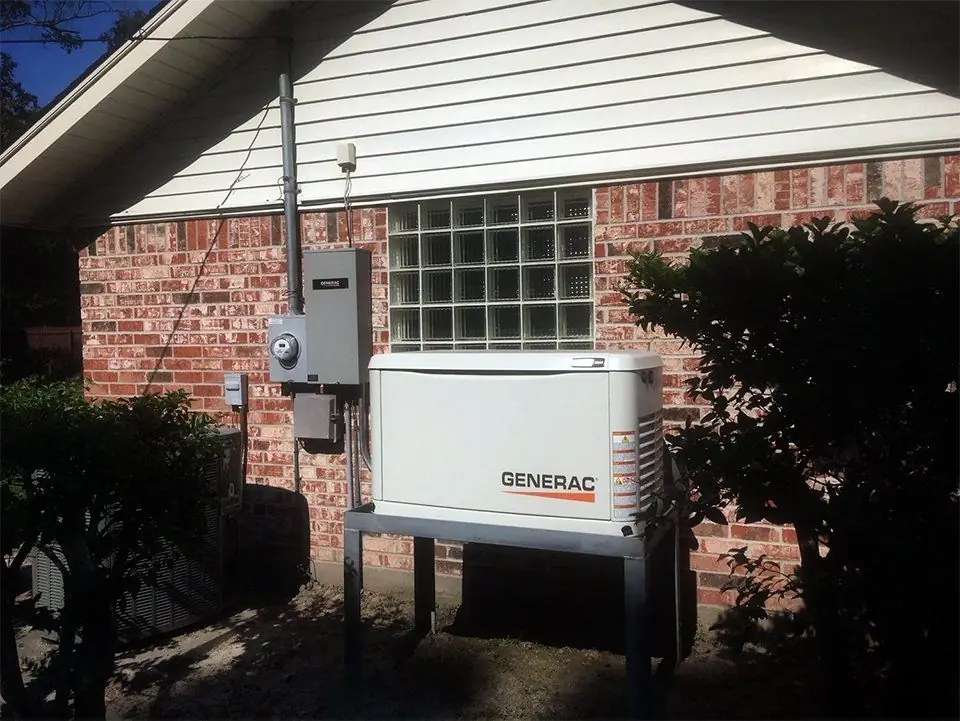
The generator conversation nearly always starts in the wrong place. Somebody has seen a unit, or been quoted a number of kilowatts, and wants to know whether it is enough. It is an impossible question until you answer a different one first: when the power goes out, what has to keep running?
Answer that honestly and the size follows almost automatically. Skip it and you either pay for capacity that never gets used, or you find out on the wrong afternoon that the air conditioning was never on the list.
Start with the list, not the unit
For most households in Southeast Texas the list looks something like this, and it is worth writing down rather than holding in your head.
- Cooling. In this climate an outage in August is a heat problem before it is an inconvenience, and for some households it is a medical one.
- The refrigerator and the freezer, which is a food bill as much as a comfort question.
- A well pump or a sump pump if the property has one. Without the first there is no water; without the second, a long outage during a storm has a second act.
- Enough lighting to move around the house safely after dark.
- The outlets that keep phones charged and any medical equipment running.
- Internet and the router, which is how most people now find out what is happening.
Beyond that it becomes a question of what you are willing to do without for a few days. An oven, a dryer and a hot tub can all be left off the list without much regret, and leaving them off often makes the difference between two sizes of unit.
Starting load is not the same as running load
The number people usually quote is the running load, which is what a device draws once it is up and turning. Motors are different. A compressor or a pump pulls a substantial surge at the moment it starts, well above what it settles at.
That surge is what catches a generator out. A unit sized on running figures alone can look correct on paper and still stumble when the cooling kicks in on top of a fridge that has just cycled. Sizing has to account for what starts, and for what might start at the same time.
The transfer switch is the part that matters most
It is also the part that gets the least attention, because it is not the interesting bit of equipment and it is not what anybody was shopping for.
The transfer switch is what disconnects the property from the grid before your generator energises anything. That does two jobs. It stops your generator and the returning utility supply from meeting each other, and it stops your generator pushing power back out onto the line where utility crews are working to restore it.
This is the reason a permanent standby installation is a different thing from running a portable unit off a lead. It is not a place to economise, and it is a large part of why the work is done by a licensed electrical contractor.
Where it sits, and what feeds it
A standby unit sits on a pad, up off the ground and clear of where water goes when this coast does what it periodically does. Placement also has to respect clearances from the building and openings, because putting exhaust next to a window is a mistake that only reveals itself later.
Then there is fuel. Natural gas has to be run and sized properly for the unit, which sometimes means the gas supply is the constraint rather than the electrical side. Propane means a tank, and the tank has to be big enough to be worth having. A generator that runs for four hours is a noise, not a plan.
Service is the half people find out about too late
A standby generator spends almost its entire life not running. That is precisely why it fails. Batteries lose capacity quietly. Fuel goes stale. A unit that has not been exercised has no way of telling you it will not start.
The units that work on the bad day are the ones that have been exercised, had their batteries and fluids checked, and been looked at by somebody between storms. If yours was installed by somebody else and has not been serviced since, that is a call worth making before hurricane season rather than during it.
Crown Electric installs, repairs and services standby generators across Beaumont and the Golden Triangle. Call (409) 842-1306, Monday to Friday, 7:00 AM to 5:00 PM, with emergency service available outside those hours.
Crown Electric Inc — (409) 842-1306
Call (409) 842-1306More articles
Good breakers, dead rooms: what that actually means
The most common call this shop takes, and the one people most often misdiagnose as a dead panel.
How to tell your panel is out of capacity before the air conditioning tells you
The warning signs are behavioural rather than dramatic, and most of them get lived with for years.