A dark sign is a closed sign, as far as the road is concerned
Nobody notices commercial lighting until it stops, and then everybody does.
September 7, 2026 · 4 min read
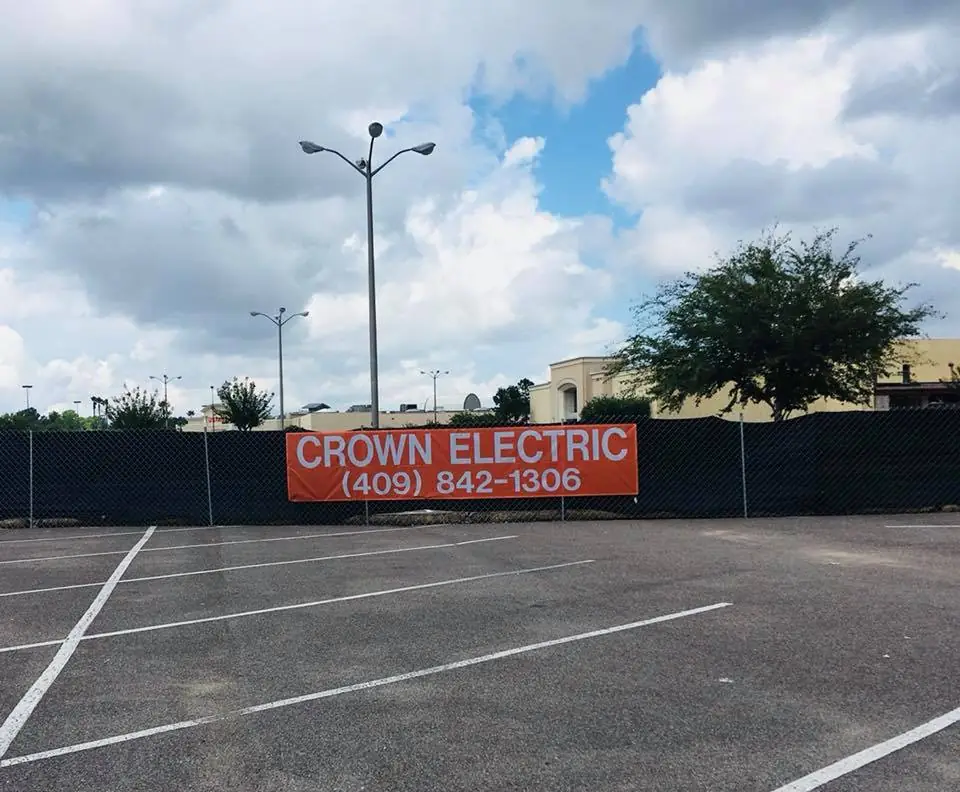
There is a category of business problem that never appears in any report. Nobody complains about it, nothing gets logged, and the first sign of it is a quieter evening than usual.
It is the sign being out. A driver going past at forty in the dark is making a fast judgement about whether you are open, and an unlit sign answers that question for them before they have consciously asked it. The same is true of a dim car park, a dark canopy, or a facade where half the wall washers have failed.
What actually fails, and roughly in what order
- Drivers and ballasts, which are the electronics behind the light rather than the light itself, and are the most common single failure in a sign.
- Photocells and timeclocks, which is why a sign sometimes comes on at the wrong hour or not at all while every lamp in it is perfectly good.
- Water ingress at fittings and joints, which on this coast is a constant rather than an event.
- Corrosion at connections, for the same reason.
- Contactors, which is often the answer when a whole bank of car park lights goes at once.
- Physical damage: wind, a delivery vehicle finding a bollard-free lamp column, or a storm.
Worth knowing: when an entire section goes dark at the same moment, it is rarely a coincidence of lamps. That is a control or a supply problem, and it is usually a cheaper fix than the symptom suggests.
Why a failed sign is not a lamp change
Sign and high-level work is different from the rest of a commercial electrical system for a practical reason: you cannot reach it. A pylon sign, a wall-mounted channel letter set, a canopy fitting and a car park lamp column all need lifting equipment to get to safely.
That changes what the job is. It has to be scheduled around trading hours and traffic, the area beneath has to be managed while work happens overhead, and it is not something to attempt from a ladder in a car park because the fix looked simple.
It is why Crown Electric runs its own bucket trucks rather than hiring lifting in when a sign goes out. A dark sign generally needs fixing this week rather than next month, and waiting on somebody else's equipment is how a week becomes a month.
The surge question, which is really a business question
Surge protection sits oddly in most commercial buildings. It is not visible, nobody asks about it, and it is easy to leave off a specification to save a little.
Then a storm event takes out point of sale equipment, refrigeration controls, a server and a set of lighting drivers in one go, and the conversation changes. On the Gulf Coast this is not a hypothetical. The protection costs a fraction of what it protects, and the real cost of the loss is rarely the equipment anyway, it is the days of trading around it.
The interior half of the same problem
Exterior lighting decides whether people come in. Interior lighting decides what they think once they have. Recessed can lighting, track lighting and display lighting are doing a job that has very little to do with brightness and a lot to do with where the eye goes.
The failure mode inside is slower and harder to spot than a dark sign, because it happens one fitting at a time. A retail floor or a dining room loses a can here and a track head there over a couple of years, and nobody registers the change because nobody sees it happen. What they register is that the room feels tired.
It is worth walking a trading space occasionally with the specific question of which fittings are actually out, rather than the general impression that the lighting is fine. The answer is usually higher than expected.
Getting ahead of it rather than reacting
The cheapest version of this problem is the one you find first. That mostly means somebody going out after dark once in a while and actually looking at the building the way a customer arriving would: the sign, the approach, the car park, the entrance, the areas that ought to feel safe to walk across.
A single failed driver caught early is a small job. The same fault left until three more have gone, and until the exposed connection has had a wet season to work on it, is a considerably larger one.
Crown Electric handles commercial exterior and sign lighting, emergency panels, surge protection, low voltage data cable, and new construction and remodel wiring across Beaumont, Port Arthur, Orange and the surrounding Golden Triangle. Call (409) 842-1306, Monday to Friday, 7:00 AM to 5:00 PM.
Crown Electric Inc — (409) 842-1306
Call (409) 842-1306More articles
Good breakers, dead rooms: what that actually means
The most common call this shop takes, and the one people most often misdiagnose as a dead panel.
How to tell your panel is out of capacity before the air conditioning tells you
The warning signs are behavioural rather than dramatic, and most of them get lived with for years.